Pilot testing supports investment planning
The revised Wastewater Directive tightens requirements to protect the environment.
Why are wastewater treatment requirements becoming increasingly stringent, and why are major changes on the horizon? The answer lies in growing awareness that traditional treatment methods cannot fully remove harmful substances such as pharmaceuticals, chemicals, per- and polyfluoroalkyl substances (PFAS), and microplastics.
The purpose of wastewater treatment is to protect both the environment and human health. To achieve this, we need knowledge and understanding of effective methods for removing these pollutants. This was the focus of the EMPEREST project, which piloted advanced micropollutant removal technologies at several wastewater treatment plants across the Baltic Sea region. The results provided valuable insights into which methods work best and how they perform under different conditions.
Why are changes necessary?
The European Union has adopted a new Urban Wastewater Treatment Directive, introducing stricter requirements for member states. Its goal is to improve the ecological status of water bodies and safeguard human health by tightening and expanding obligations for wastewater treatment plants.
Pharmaceuticals and various chemicals are essential for human health and safety, but once they enter and accumulate in the environment, they often pose risks to both ecosystems and people. These micropollutants reach the environment through wastewater treatment plants after normal everyday use.
One of the most significant changes in the directive is the mandatory removal of micropollutants – a requirement absent from the previous directive. This means that conventional treatment processes are no longer sufficient; plants must add an entirely new treatment stage.
Piloting in Turku – what did we learn?
The Turku Region Wastewater Treatment Plant was among the facilities participating in EMPEREST pilot trials. The focus was on evaluating the efficiency of ozonation and granular activated carbon filtration in removing harmful substances under different operating conditions.
Key findings from the piloting:
- Activated carbon filtration proved effective in removing harmful substances, but its efficiency declined quickly.
- Effective pre-filtration, such as sand filtration, reduces the solids load entering the activated carbon filter, extending its replacement interval.
- Combining ozonation and sand filtration before activated carbon improved removal efficiency of the indicator substances named in the directive and extended the replacement interval of the activated carbon.
- For PFAS compounds, performance varied: some were effectively removed, while concentrations of short-chain PFAS actually increased.
- A minimum contact time of 20 minutes in activated carbon filtration is essential for efficient removal of harmful substances.
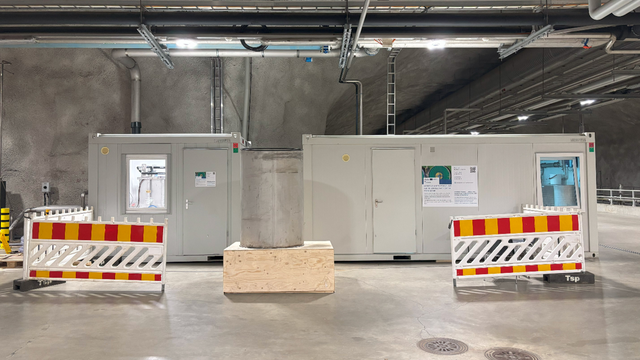
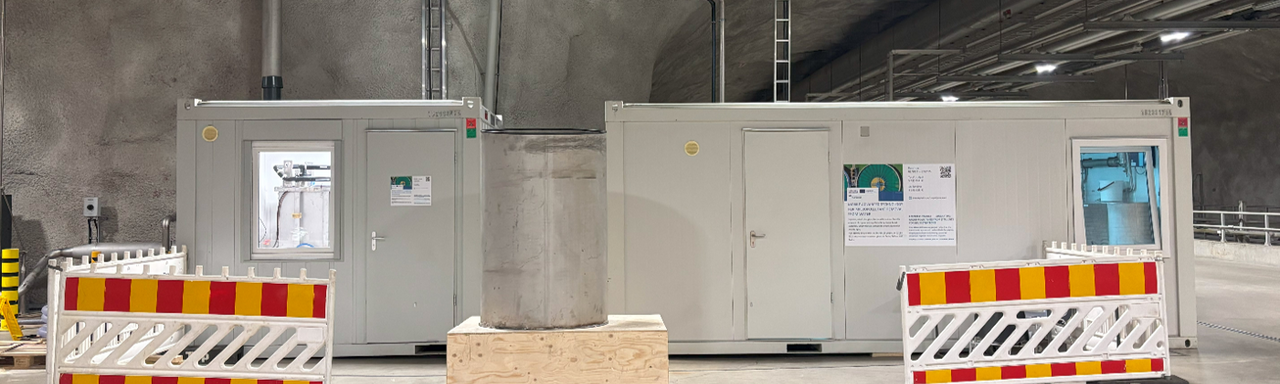
On the photo: EMPEREST mobile pilot containers installed at the Turku WWTP located inside the rock. Photo by Mia Aitoukazzamane.
Why pilot testing matters
The pilot provided valuable data for future planning. Choosing the right technology is critical for investment decisions to ensure sufficient micropollutant removal. The revised directive will require significant changes and investments, but these are essential for protecting the environment and human health.